






Excellent penetrability, capable of penetrating paper, coatings, foam, plastic, glass, paint, insulating materials; almost all dielectric materials
Non-contact transmission and reflection terahertz time-domain imaging
Fast inspection efficiency (up to 1 kHz)
High precision (due to the specificity of time-based measurement)
Measurement capabilities (multi-layer inspection, thickness measurement, water content, density, composition measurement)
More imaging capabilities
No radiation, non-ionizing --- safe and reliable

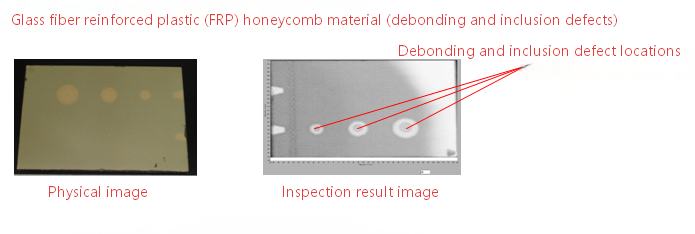

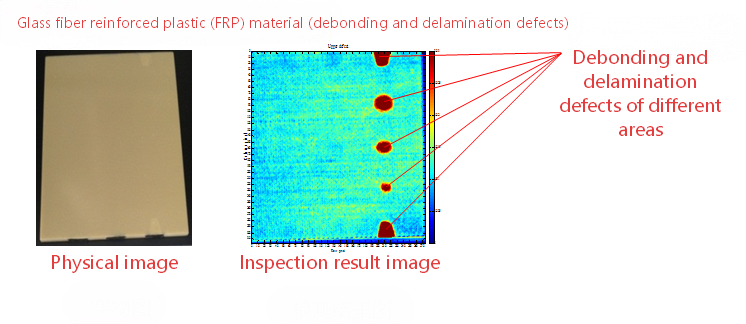
The THz device is configured as a handheld tool,
capable of measuring up to three layers simultaneously using automated algorithms.
Various products can be inspected with selectable measurement configurations.
Applications of the Thickness Gauge
• Inspect thickness or layer structure of coatings or multi-layer extrusions
•The gauge can determine thickness, basis weight, and delamination
•Inspect bond lines between molded structures and substrates
•Defect detection in composite structures (fiber-reinforced plastics)
Professional Inspection and Analysis Software
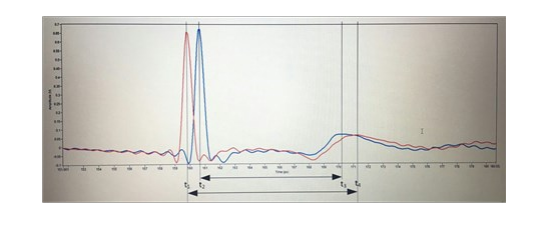
The software records and displays the raw time-domain signal of the terahertz pulse. By analyzing the time delay of the pulse peak, the optical path difference can be precisely calculated, enabling nanometer-accurate thickness measurement of single-layer or multi-layer materials. This mode is the fundamental method for obtaining basic physical property parameters such as refractive index and absorption coefficient of materials.

By arranging the time-domain waveforms of a series of consecutive measurement points in spatial order, a two-dimensional cross-sectional image perpendicular to the scanning direction inside the sample is constructed. This function can intuitively present the precise location and longitudinal size of defects (such as debonding, porosity) in the depth direction, serving as a key tool for defect characterization and depth positioning.
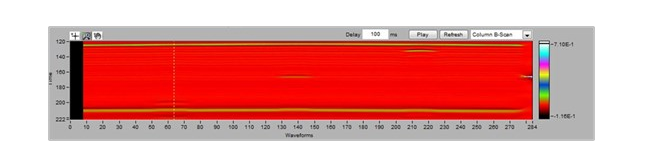
By setting a specific time gate (corresponding to a specific depth), the signal intensity or peak time information at that depth for each scanning point is extracted, generating a two-dimensional planar projection image of a specific layer inside the sample. It can clearly reveal the planar distribution, shape, and size of defects, making it suitable for large-area rapid screening and quality assessment.
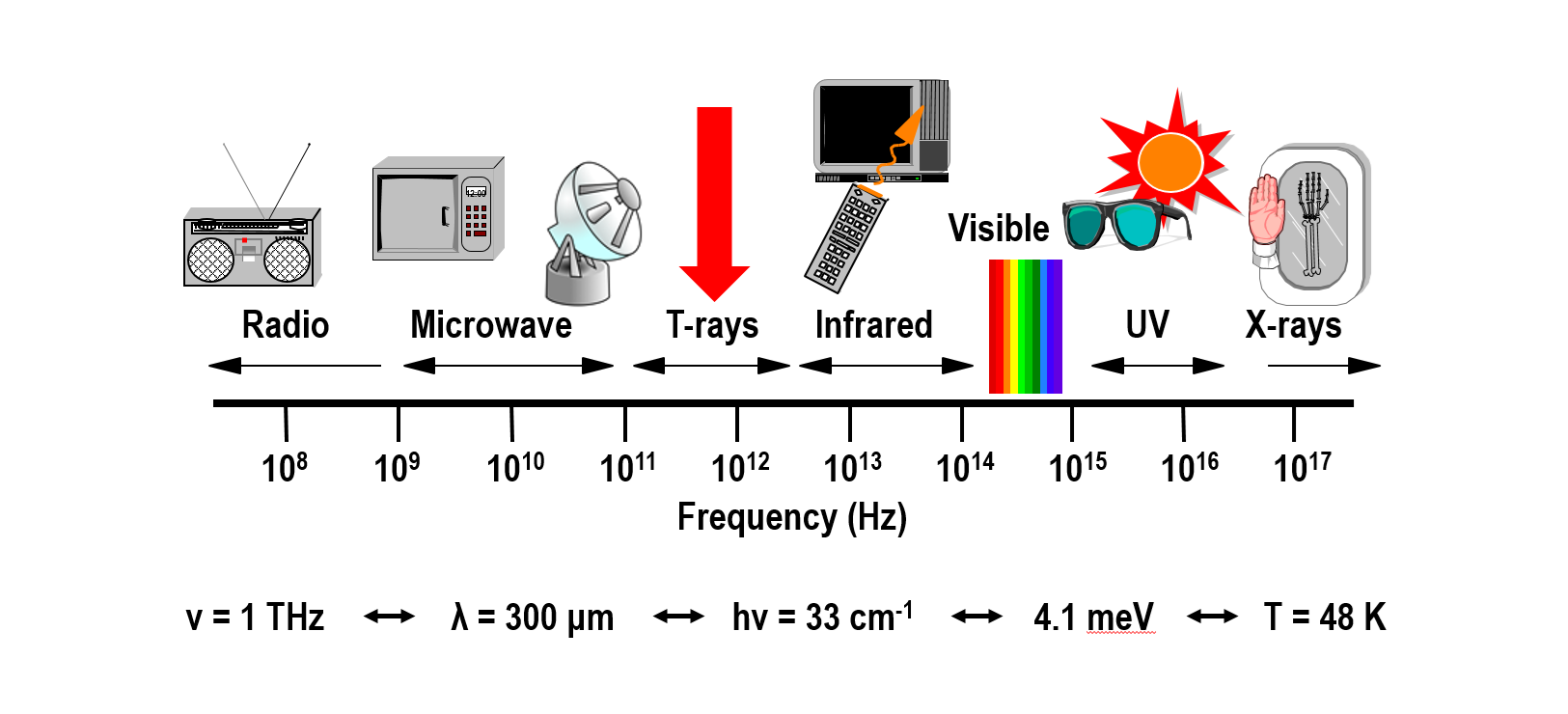
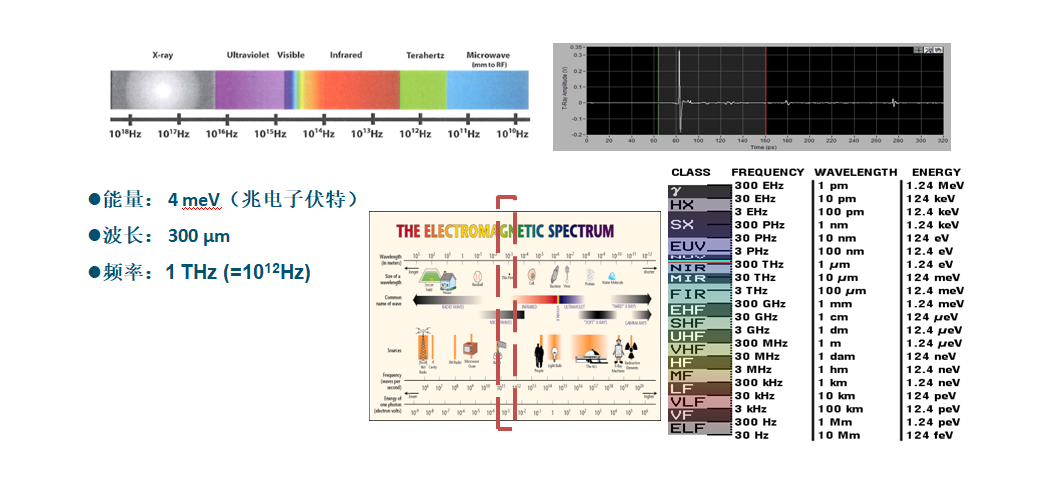
Terahertz (THz) waves generally refer to electromagnetic radiation with frequencies between 0.1 and 10 THz, corresponding to wavelengths from 3 mm to 30 μm; this band lies between microwaves and infrared. Terahertz inspection systems utilize THz waves transmitted through a sample or reflected from its surface to measure the resulting time-varying THz electric field. By applying Fourier transform, the amplitude and phase changes of the THz pulse in the frequency domain are obtained, thereby extracting information about the sample.
| Parameter Name | Value |
| Frequency Range | 0.0015~10(optional) |
| Signal-to-Noise Ratio | >70 dB |
| Fast Scan Range | 160~700per second |
| Long Scan Range | 2.8 ns |
| Scanning Accuracy | 0.1~0.6m |
| Scanning Resolution | 0.1 mm |
| Energy | 4 meV |
| Wavelength | 300 μm |
| Frequency | 1 THz |
Microwave absorbing material is a type of material that can absorb or significantly reduce electromagnetic wave energy, thereby reducing electromagnetic interference. It features light weight, temperature resistance, moisture resistance, corrosion resistance, and other properties.
The thickness and uniformity of the coating have a direct impact on the material's performance and stealth effectiveness, so it is necessary to control coating quality through non-destructive testing methods.
Currently, commonly used thickness measurement methods include ultrasonic thickness measurement, eddy current thickness measurement, infrared thickness measurement, and radiographic thickness measurement.
Ultrasonic thickness measurement is suitable for contact inspection but cannot accurately measure multilayer structures; eddy current thickness measurement is limited by electrical conductivity; infrared thickness measurement performs poorly at high temperatures and has limited resolution; radiographic inspection offers high accuracy but carries radiation risks.
Therefore, a new non-destructive testing method is urgently needed, and terahertz NDT technology can meet this requirement.
What is Terahertz?
It is a part of the electromagnetic spectrum between infrared and microwaves. Time-domain terahertz is a pulsed electromagnetic method used for measurement, defect detection, and imaging. It is often used like an electromagnetic analog of ultrasound.
 EN
EN