





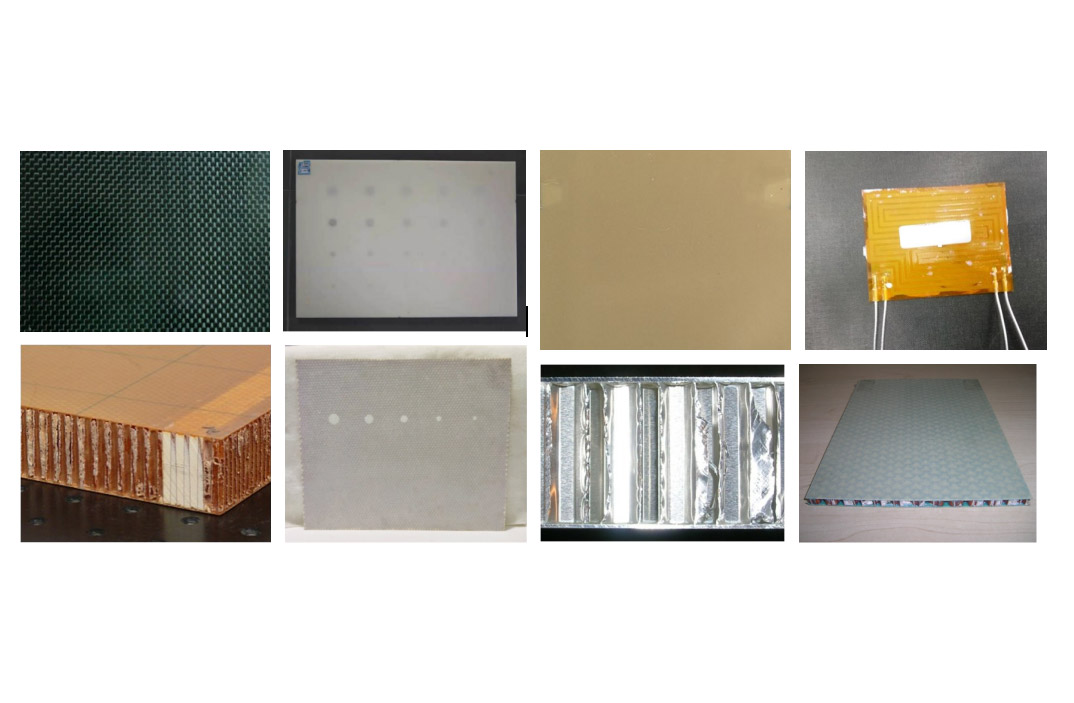
●Inspection of internal defects (delamination, debonding, impact damage, cracks, etc.) in composite materials (e.g., carbon fiber and glass fiber reinforced composites) and multi-layer bonded structures
●Inspection of skin-to-stiffener debonding
●Inspection and quantitative evaluation of internal defects and water ingress in honeycomb panels and foam sandwich panels
●Inspection and quantitative evaluation of backside corrosion in metal plates
●Inspection of internal debonding and thickness variation of thermal barrier coatings on various high-temperature components (e.g., blades, turbine disks, combustion chambers) of aero-engines and gas turbine engines
●Inspection of debonding of propellant liner in solid rocket motors
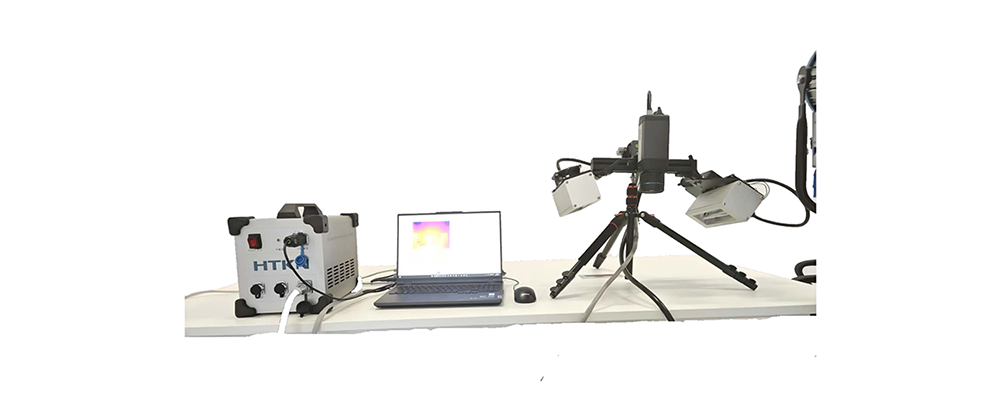
The HT9300 Series active infrared thermography NDT system is a self-developed NDT product by our company. This model is highly portable, easy to carry, and adaptable to various environments, meeting diverse NDT requirements. It is mainly used for detecting defects such as delamination, debonding, corrosion, and impact damage in composite materials, metallic and non-metallic bonded structures, etc.
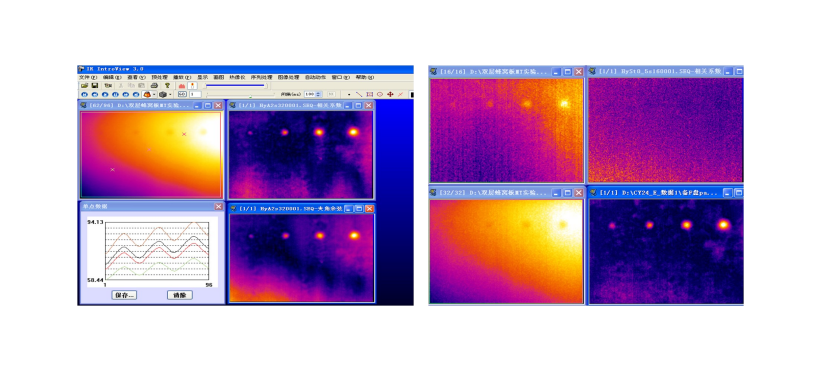
Infrared Thermography NDT Software (BH-IRNDT) is a professional software solution integrating inspection, processing, and analysis for infrared thermography non-destructive testing and non-destructive evaluation.
Its main functions include thermal image acquisition, thermal excitation control, thermal image sequence processing, defect feature enhancement, defect signal analysis, and interpretation for infrared thermal NDT (IR TNDT).
It supports the operation and thermal image sequence processing of mainstream active IR TNDT techniques such as Pulsed Thermography (PT), Modulated Thermography (MT), and Step Thermography (ST) with multi-frequency thermography, and can also be used for thermal image analysis and processing in other infrared NDT, infrared thermography diagnostics, and infrared temperature measurement.
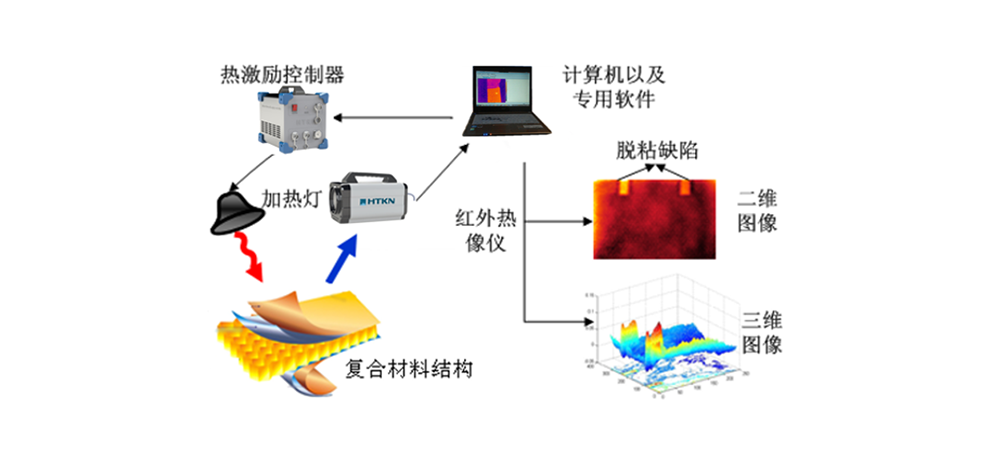
According to transient heat transfer theory, there is a certain mapping relationship between internal defect conditions and the thermal response process and behavioral changes of an object. By extracting the characteristic information of the thermal process and expressing it in the form of digital images, defects can be intuitively "seen".
| Detector | |
| Detector Type | Uncooled (cooled optional) |
| Wavelength Range | 1.5-13.5 μm (optional) |
| Resolution | 640 x 480 (optional) |
| Detector Pixel Pitch | 17 μm (optional) |
| NETD | mK (optional) |
| Imaging | |
| Frame Rate | 50 Hz to 200 Hz (optional) |
| Sub-windowing | 640" × 240" × 120" (GigE) |
| Maximum Frame Rate | (@ minimum window) 200 Hz (640 × 120) |
| Dynamic Range | 16-bit |
| Digital Data Stream | GigE (50/100/200 Hz); USB (25 Hz) |
| Command & Control | GigE |
| Measurement | |
| Inspection Area | 185 × 220 mm² (optional) |
| Accuracy | ±2°C or ±2% of reading |
| Thermal Loading Power | Halogen lamp 2000 W / pulsed flash lamp 9600 W (optional) |
| Standard Temperature Range | 40°C to 150°C, 100°C to 650°C |
| Optional Temperature Range | Up to 2,000°C (3,632°F) |
 EN
EN