





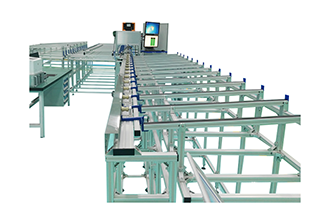

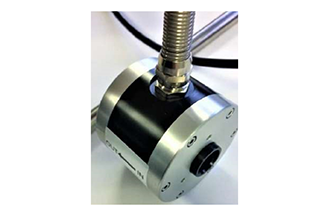
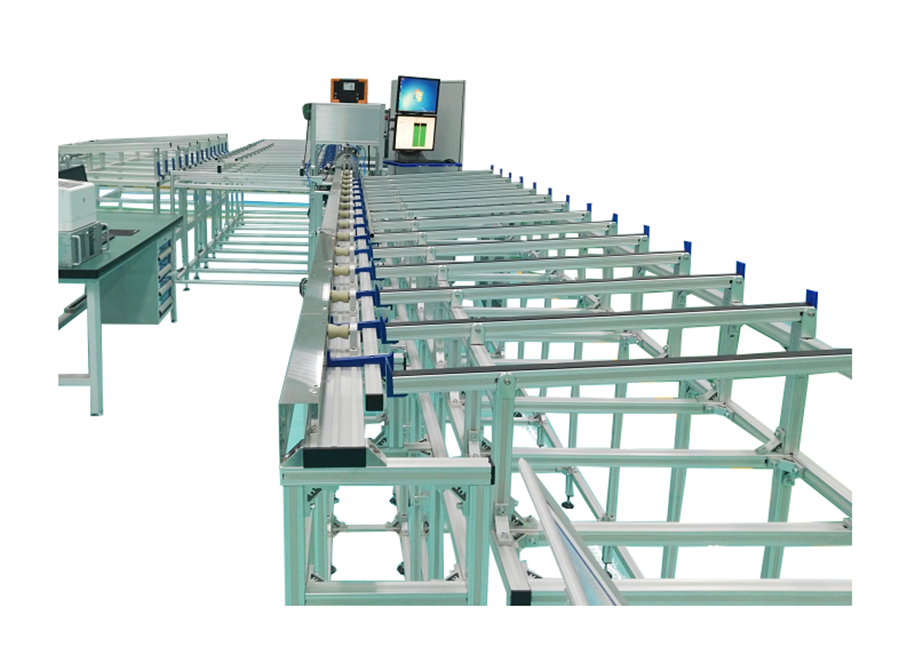
Through experiments, it has been found that the absolute probe independently designed by ZETEC offers good detection sensitivity for crack defects machined on the leading and trailing edges of blades. Moreover, the phase difference between the defect signal and the lift-off signal is significant, making it easier to detect micro-crack type defects. By customizing the inspection probe according to the blade shape and structure, defects within 5 mm of the leading and trailing edges can be effectively detected. For detecting subsurface defects inside the blade, it is necessary to select an appropriate low-frequency eddy current testing probe based on the required detection depth.
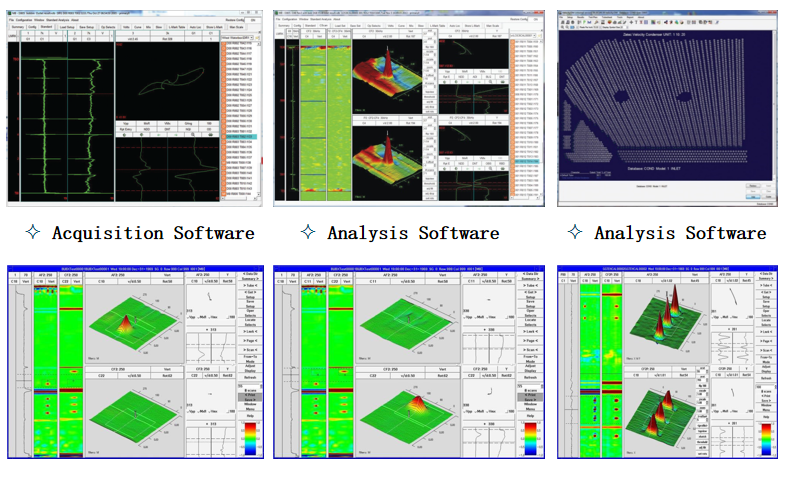
Eddy current array probes contain multiple independent coils inside
Coils are excited in a specific sequence to eliminate interference between coils (channel multiplexing technology)
Probes can be designed as flexible or in any geometric shape
The software can provide C-scan image display (2D C-scan image or 3D C-scan image)

Compared with conventional eddy current testing, the main difference of Eddy Current Array (ECA) non-destructive testing is that the ECA probe consists of multiple independently operating coil elements arranged in a specific pattern, with two mutually perpendicular electromagnetic field transmission modes formed between the excitation (transmitter) and detection (receiver) coils, as shown in Figure 1.
This arrangement of coils facilitates the detection of linear defects with different orientations.Eddy current array enables fast inspection;
larger single-pass inspection area;
probes designed to conform to the workpiece provide better stability for inspecting complex components;
eddy current array offers higher defect detection capability;
simpler scanning modes reduce scanning equipment costs;
can be used for inspecting restricted areas;
chemical-free, green, and requires no cleaning.
 EN
EN