





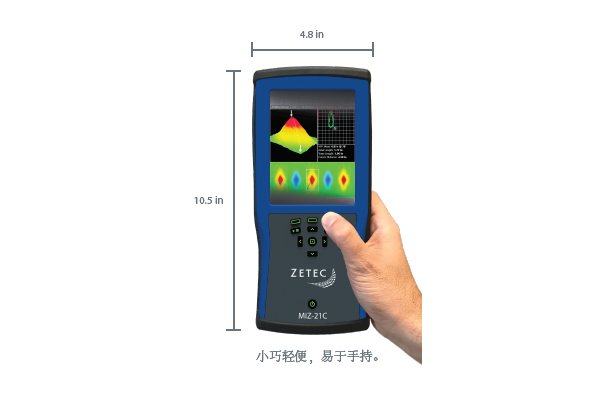

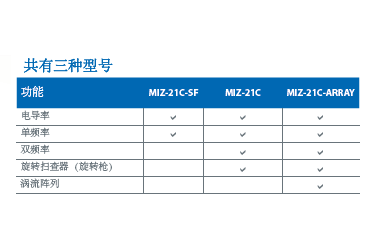
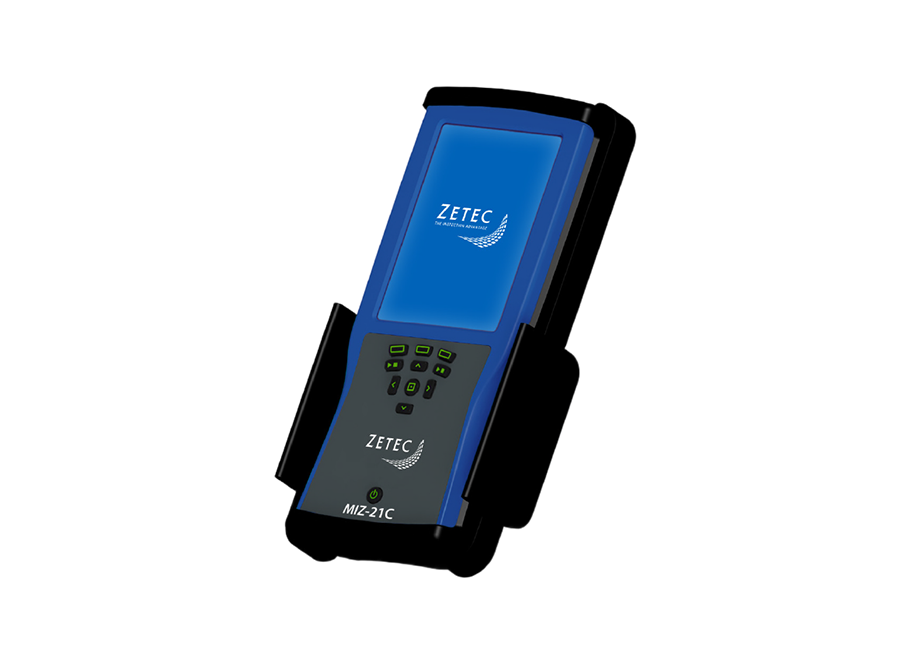
Configurations: MIZ-2C-SF, MIZ-21C, MIZ-21C-ARRAY
Supports spot eddy current, conductivity measurement, eddy current array
Used in aerospace, petrochemical, railway and other fields
Applications: rivet hole cracks, multi-layer material corrosion, conductivity, coating thickness measurement, friction stir weld cracks, welds and corrosion in pipes, storage tanks and vessels;
Signal-to-noise ratio: 25% higher than similar products
Data size: 8 MB
8-hour power supply
Bandwidth: 10 Hz to 5 MHz
Trigger voltage: 19 V p-p
A/D resolution: 16-bit
Supports two-axis encoding
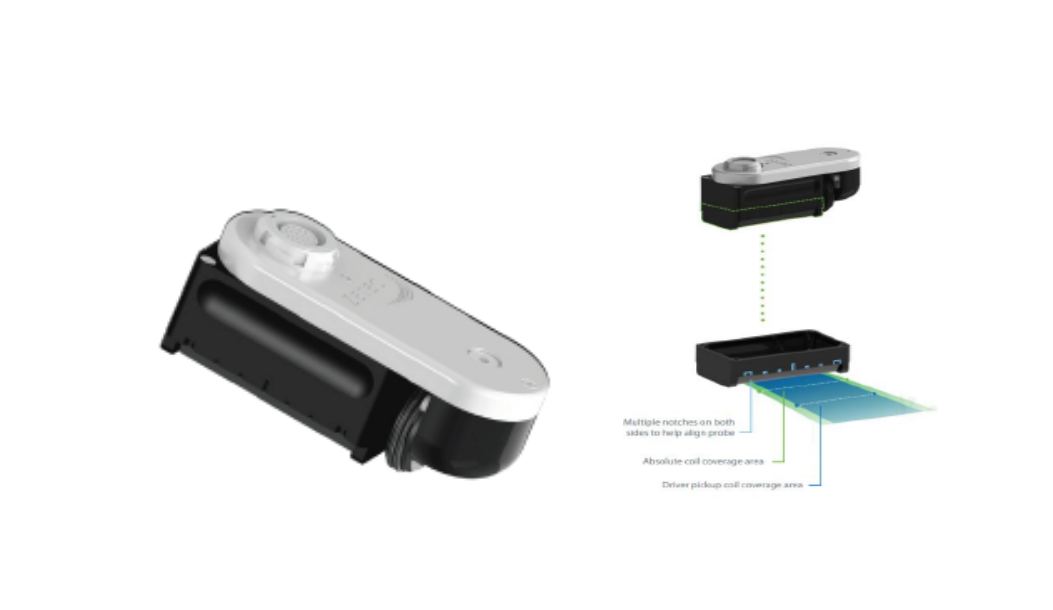
Eddy current array probes contain multiple independent coils inside
Coils are excited in a specific sequence to eliminate interference between coils (channel multiplexing technology)
Probes can be designed as flexible or in any geometric shape
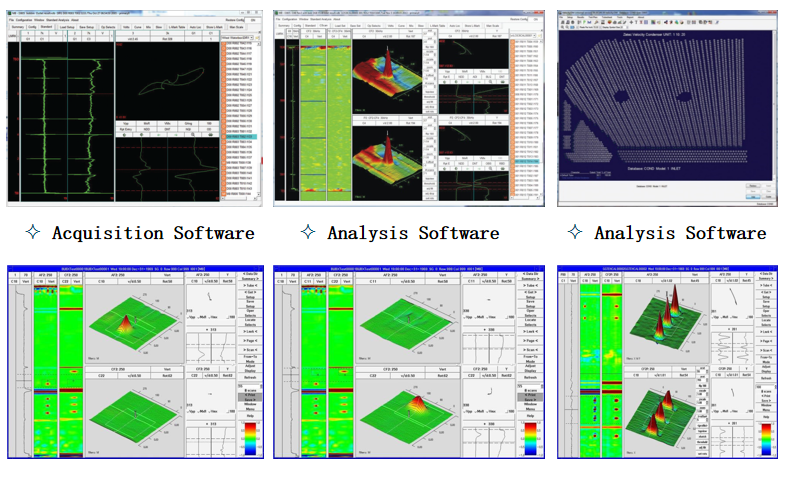
The software can provide C-scan image display (2D C-scan image or 3D C-scan image)
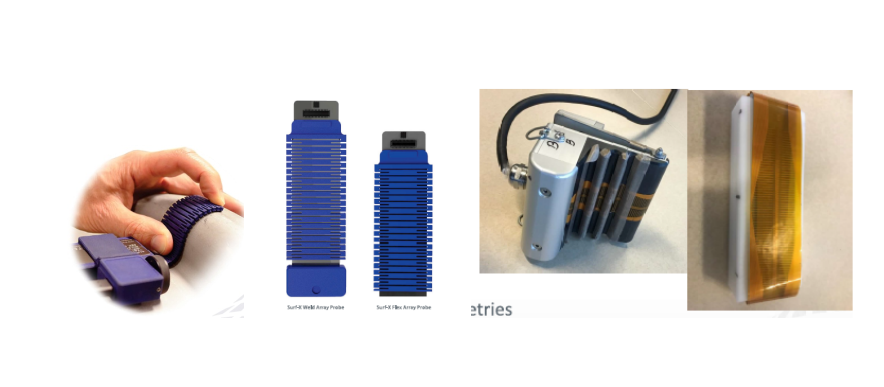
The Surf-X flexible array probe can adapt to gradual changes in the geometry of pipes, pressure vessels, or tanks, enabling surface and near-surface defect detection on various materials including aluminum and stainless steel;
The Surf-X flexible array probe can adapt to the geometric changes of raised welds, enabling detection of longitudinal and transverse cracks in the weld cap, weld toe, and heat-affected zone.The Surf-X array probe achieves scan line alignment via a position indicator on the probe, ensuring inspection of the entire area of interest.The Surf-X flexible array probe can perform surface inspection of flat workpieces, including friction stir weld inspection.The probe's wear-resistant surface has been tested for inspections exceeding 10,000 feet and is an inexpensive replaceable part.

Compared with conventional eddy current testing, the main difference of Eddy Current Array (ECA) non-destructive testing is that the ECA probe consists of multiple independently operating coil elements arranged in a specific pattern, with two mutually perpendicular electromagnetic field transmission modes formed between the excitation (transmitter) and detection (receiver) coils, as shown in Figure 1. This arrangement of coils facilitates the detection of linear defects with different orientations.
Eddy current array enables fast inspection;
larger single-pass inspection area;
probes designed to conform to the workpiece provide better stability for inspecting complex components;
eddy current array offers higher defect detection capability;
simpler scanning modes reduce scanning equipment costs;
can be used for inspecting restricted areas;
chemical-free, green, and requires no cleaning.
 EN
EN